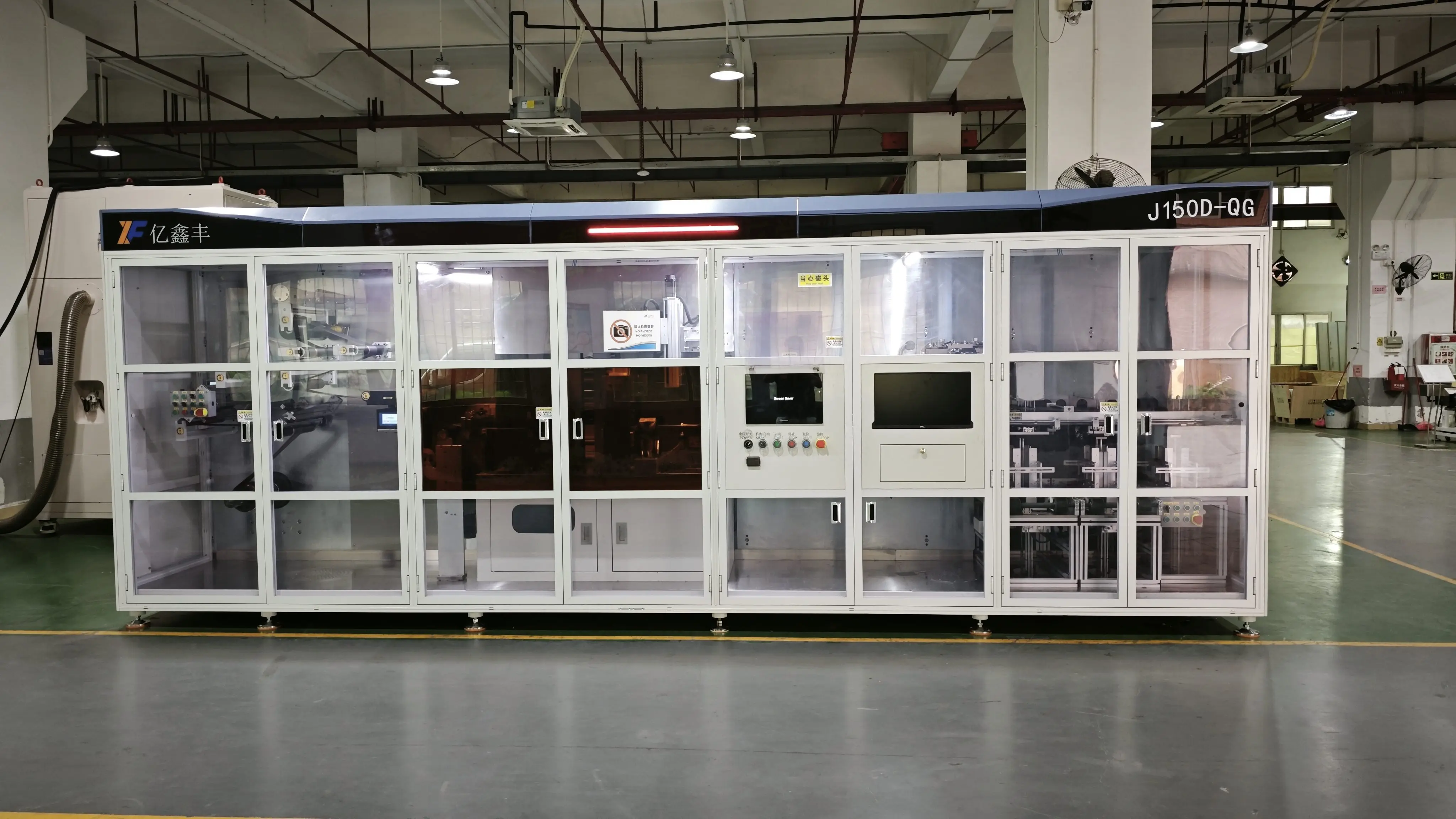
While traditional die cutters struggle with ±0.1mm tolerances, all-laser die cutters have reset industry benchmarks with ±0.02mm precision. This disruptive technology—replacing mechanical dies with laser beams—helps packaging, electronics, and textile industries break free from "mold dependency." After adopting all-laser die cutting, a 3C manufacturer saw FPC board cutting yield surge from 89% to 98.7%, with model changeover time slashed by 70%. As CO₂ and fiber laser technologies converge, a manufacturing precision revolution from "millimeter-level" to "micron-level" is un
Folding.
- CO₂ Laser: 30-1000W power penetrates 1-20mm non-metals (acrylic, leather) like hot knives through butter. A footwear brand cut complex sole patterns 4x faster than traditional punching.
- Fiber Laser: 10μm spot size cuts micro-gears on 0.1mm stainless steel foil with <0.01mm pitch error—1/6 the diameter of a human hair.
A light path system with gold-plated mirrors and ZnSe lenses ensures <3% energy loss. After installing a 5-axis dynamic focusing system, an automotive seal manufacturer achieved 300% higher efficiency in 异形件切割 (irregular part cutting), with edge roughness Ra ≤1.6μm (mirror finish).
- Linear motors drive laser heads at 1200mm/s with 1.5G acceleration.
- Renishaw linear encoders enable ±0.005mm positioning—20x more precise than worn mechanical dies.
In
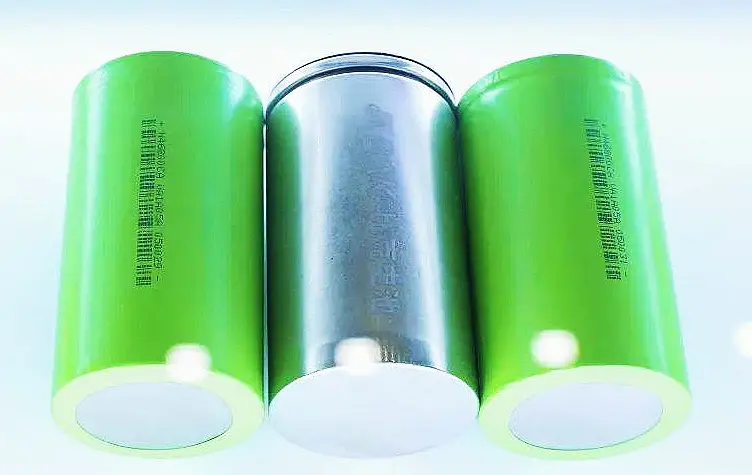
Lithium Battery pole piece cutting, 1064nm fiber laser at 20kHz instantly vaporizes aluminum foil, with heat-affected zone <5μm—10x better burr control than traditional die cutting. A energy storage enterprise reduced battery short-circuit failure rate by 92%.
With N₂ assist gas, 2000W CO₂ laser penetrates 10mm carbon steel at 1.2m/min. A steel structure factory processed irregular parts 5x faster than flame cutting, eliminating secondary grinding.
| Advantage | Traditional Mechanical Die Cutting | All-Laser Die Cutting | Case Data |
| Precision Control | ±0.1mm | ±0.02mm | Electronic component yield +9% |
| Model Changeover | 2-4 hours / 次 | 10 minutes / 次 | Packaging small-batch cost ↓60% |
| Material Compatibility | Single-material mold limitation | Metals/non-metals/composites | Toy factory mold cost ↓70% |
| Maintenance Cost | $50,000+ annual mold replacement | Laser tube life ≥10,000 hours | Auto parts maintenance cost ↓80% |
- Starbucks limited-edition cup cutting: 3-hour design-to-prototype, 80% faster than traditional molds.
- Special-shaped gift box production: An e-commerce packager shortened lead time from 7 days to 1 day.
- FPC flexible circuit board cutting: 50W UV laser processes 0.1mm holes on 0.05mm polyimide film with >89° wall perpendicularity.
- Chip packaging cutting: A semiconductor firm improved wafer dicing yield from 91% to 99.3%.
- ZARA adopted laser cutting for complex embroidered fabrics, achieving 5x efficiency and waste rate ↓from 15% to 3%.
- Carbon fiber cutting: Lasers prevent fiber breakage, retaining 98% fabric strength.
-
Power Selection: Tailored to Materials
- Non-metals (paper/leather): 30-100W CO₂ laser
- Thin metals (<1mm): 100-300W fiber laser
- Thick metals (>5mm): 1000W+ fiber laser
-
Cutting Area: Matched to Production Scenarios
- Prototyping: 600×400mm small platform
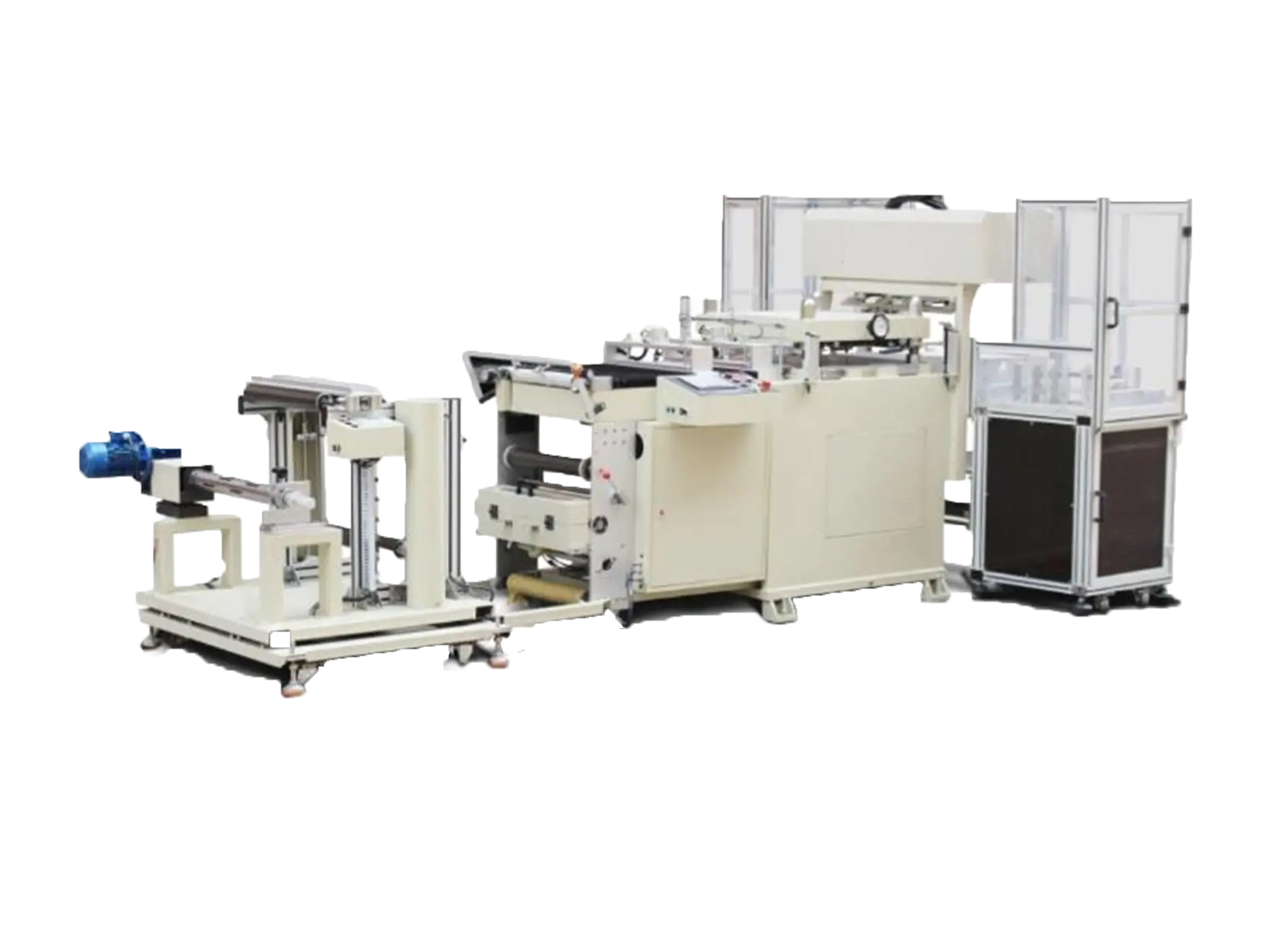
- Mass production: >1600×1000mm (e.g., Yixinfeng LMC-1610)
-
Software Ecosystem: Key to Production Flexibility
- AI auto-nesting (e.g., EvaCAD) boosts material utilization by 15%.
- Compatible with DXF/PLT, seamless ERP integration.
- Optical lenses: Weekly cleaning with anhydrous ethanol + lint-free cloth (fingerprints cause 15% energy loss).
- Guide rail lubrication: Monthly food-grade silicon-based grease (prevents metal dust accumulation).
- Laser power calibration: Quarterly detection—adjust if deviation >5%.
| Issue | Possible Cause | Solution |
| Charred cutting edges | Excessive laser power | Reduce power by 20% + adjust speed |
| Pattern offset | Encoder reading error | Clean encoder or replace reader |
| Unstable laser output | Aged laser tube/cooling failure | Replace tube/check water circulation |
At the Hanoi Energy Storage Exhibition, Yixinfeng LMC-2025 all-laser die cutter demonstrated <0.01mm error in cutting 30μm aluminum-plastic film for solar cell tabs, securing a trial order from LG Energy Solution. From the Pearl River Delta to the Rhine River, this "Chinese precision" is redefining global manufacturing efficiency—after adopting the equipment, a German auto parts manufacturer cut sensor cutting costs by 42%, proving that "laser die cutting = industrial efficiency accelerator."
📞 Immediate Consultation: +86 186 7621 4514
#Industrial40 #LaserManufacturing #SmartManufacturing